
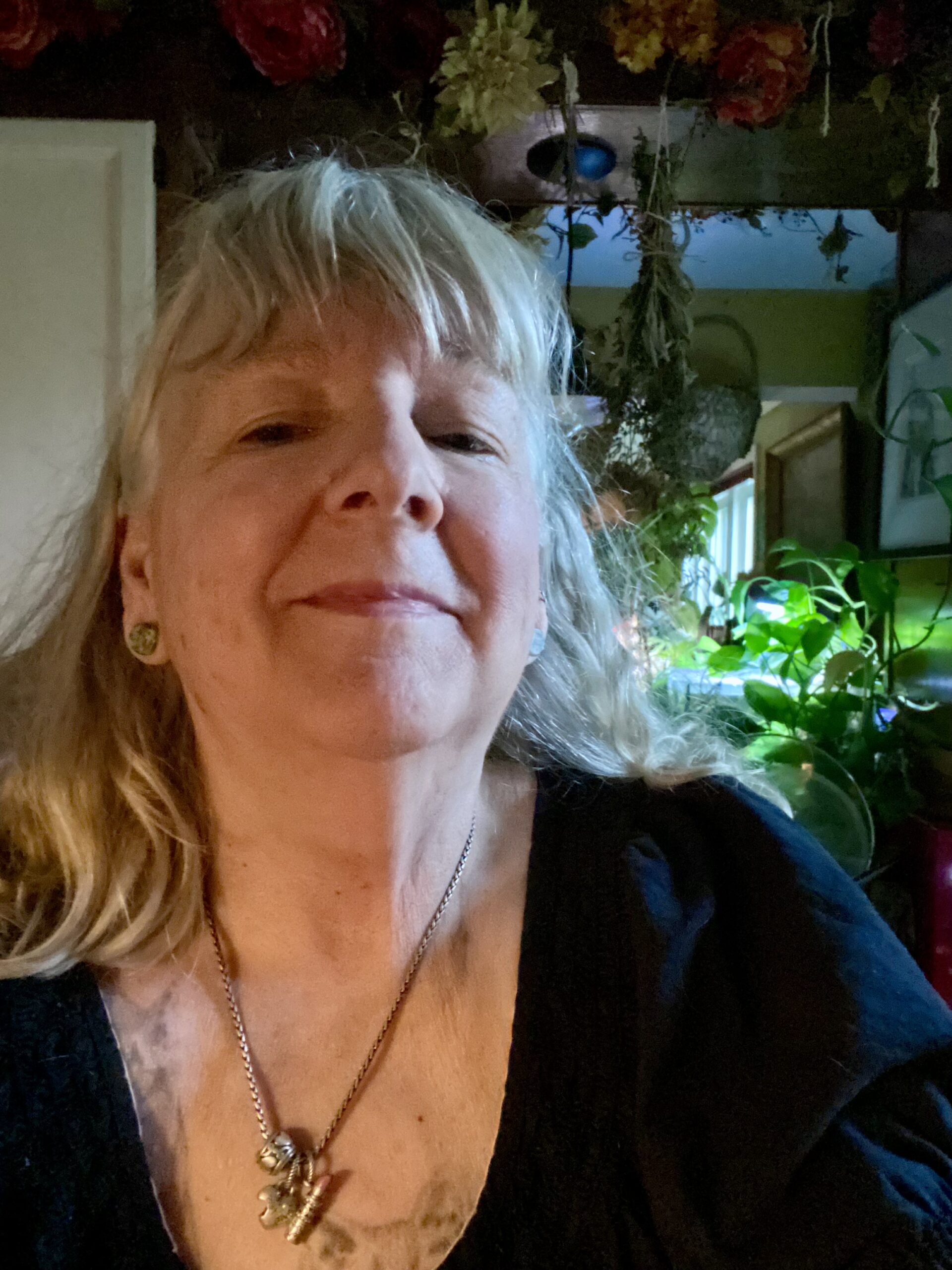
Some poets discover poetry through a single transformative moment. For Rachael Ikins, it arrived gradually through childhood, family, hardship, and an unwavering need to make sense of the world.
In the latest PoetryBuzz Press interview, Rachael shares a life shaped by language, resilience, and an enduring belief that poetry isn’t simply something we write. It’s something that helps us survive and dare I say, thrive.
From reading poems aloud to her father as a child to publishing multiple collections later in life, Rachael’s journey reminds us that creativity rarely follows a straight line. Instead, it twists through unexpected places, asking us to trust both the process and ourselves.
Poetry Began Before She Knew It
Rachael’s relationship with poetry started almost before she understood what poetry was.
She recalls copying poems from the classroom blackboard as a child, an experience that quietly planted the seeds of a lifelong creative practice. At home, her father—who she later realized was likely dyslexic—would ask her to read poetry aloud from a small anthology he carried during his military service.
Those moments became some of her earliest memories of language as connection.
Another turning point came in eighth grade, when an English teacher looked over her shoulder as she was writing and simply said:
“There’s no doubt about it. You are a poet.”
Sometimes a single sentence changes the direction of a life.
Poetry as a Lifeline
Throughout our conversation, one idea surfaced again and again: poetry has never been merely a hobby for Rachael.
It has been a way to process grief, illness, uncertainty, and joy.
She spoke candidly about being misdiagnosed for years and heavily medicated, describing how the medication seemed to silence the very part of herself that wrote poems. Losing access to poetry, she explained, felt like losing a part of her identity.
Eventually, the misdiagnosis was corrected, and poetry returned.
That return became one of the defining moments of her creative life.
For Rachael, writing isn’t optional. It is how she understands experience and continues moving through it.
When Life Falls Apart, Poetry Remains
One of the interview’s most moving stories centers around a period when Rachael and her husband lost nearly everything financially.
Living in a small cottage near the woods of Central New York, she stumbled upon a tiny newspaper announcement for a poetry competition hosted by the National League of American Pen Women.
With only a few dollars to spare, she entered.
Weeks later she learned she had earned First Prize among hundreds of entries, along with an Honorable Mention.
The awards weren’t simply recognition.
They were validation.
After years of hearing that poetry wasn’t practical or couldn’t become something meaningful, those honors confirmed what she had always believed deep down—that her voice mattered.
Trusting the Poem
When asked about her writing process, Rachael resisted the idea that poems move neatly from beginning to end.
Instead, she describes poems as living things.
Many begin while walking in the woods, often inspired by something visual that quietly demands attention.
Others arrive unexpectedly—in hospital rooms, during recovery from surgery, or in the quiet hours before dawn.
Perhaps the most memorable insight she shared was this:
You have to let the poem be in charge.
Rather than forcing a piece toward completion, she lets poems rest until they reveal where they want to go. Some return after hours. Others after years. Occasionally, she revisits work written decades earlier and discovers a poem waiting to emerge.
It’s an approach built on patience rather than control.
Creativity Doesn’t Expire
One of the most encouraging parts of our conversation centered on age and creativity.
While many writers worry they’ve started too late, Rachael offers a very different perspective.
Much of her published work has appeared after the age of sixty.
She believes that life experience deepens poetry in ways youth simply cannot.
As she reflected on earlier versions of herself, she laughed about believing she understood everything in her twenties.
Life, she suggests, has a way of teaching us otherwise.
Those lessons eventually become poems.
A Poet Who Keeps Listening
Asked to compare one of her poems to a physical object, Rachael surprised me.
“A cat,” she answered without hesitation.
The explanation was wonderfully fitting.
Like poetry, cats cannot be controlled. They appear when they choose, disappear without explanation, and demand attention on their own terms.
Poems, she suggested, behave much the same way.
Perhaps that’s why her work feels so alive. Rather than chasing poems, she listens for them.
Watch the Full Interview
Our conversation with Rachael Ikins explores far more than writing. It touches on resilience, creativity, neurodiversity, healing, publishing later in life, and the remarkable ways poetry helps us navigate whatever life places before us.
Whether you’re a poet, an avid reader, or someone curious about the creative process, this interview offers wisdom, honesty, and more than a few unforgettable stories.
Watch the complete interview on the PoetryBuzz Press YouTube channel, and discover why Rachael Ikins continues to inspire readers and writers alike.
Check out some of Rachael’s artwork below!


